When Training More Stops Working: Why frequency rewards discipline and punishes ego
by- Josh Bryant
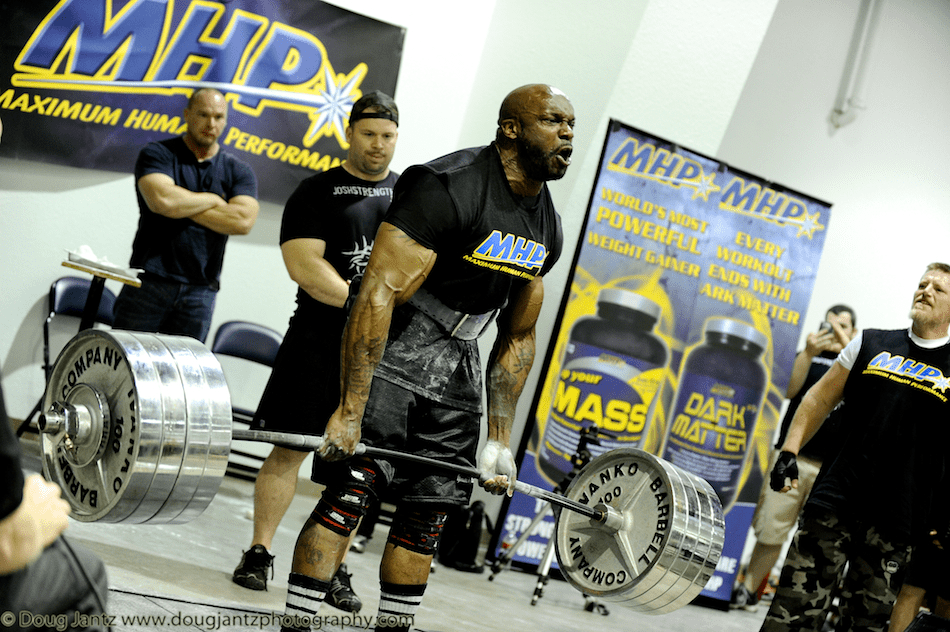
Orlando Maximus Green: Deadlift style and mindset don’t need frequent exposure.
Ten to twelve years ago, #SquatEveryDay was everywhere. It was the cool kid at the lunch table. Now the hashtag is gone, and so are a lot of the people who pushed it the hardest.
Some lifters absolutely got results from high frequency. Many others vanished from the strength scene entirely. That alone should tell you something.
High frequency, in the right context, is king. High frequency, in the wrong context, will bury you alive.
This is not a new idea. Philosophers were talking about this long before hashtags and Instagram coaches with “3 spots available.” Thomas Troward used electricity as an analogy. Electricity can cook your dinner, or it can cook you. Same force. Different application.
Training frequency works the same way.
Used correctly, it produces incredible results. Used blindly, it burns people to the ground.
Most of the modern high-frequency obsession traces back to Eastern Bloc Olympic lifting. And here’s the critical detail people miss: Olympic lifts are closer to gymnastics with a barbell than pure brute strength.
This is distilled, precise work. Think top shelf Russian vodka, filtered and intentional, not cheap rot gut you slam before a bar fight outside Poison Rock’n’Roll Karaoke “Пойзон Рок-н-ролл Караоке”on Dumskaya Street in St. Petersburg.
Strength is required. Explosiveness is required. But skill is very often the limiting factor.
Walk into Division I weight rooms. You are looking at the best athletes in the country. Strong. Fast. Explosive. Many of them still struggle to execute elite Olympic lifts cleanly, even with top-tier coaching.
These are not weak or unathletic people. The bottleneck is technical precision.
That is why Olympic lifters need frequent exposure. They are not chasing fatigue. They are chasing mastery. And yes, mastering the snatch takes time. Get your head out of the gutter. Or don’t. Either way, it proves the point.
Bodybuilding: Stimulus Beats Skill
Bodybuilding is a different game.
Bodybuilders are chasing stimulus, not technical mastery. The best movements are the ones that load the muscle hard with the smallest learning curve possible.
If you can master an exercise the first time you touch it and it delivers the same mechanical tension as something that takes years to refine, the simpler option wins every time.
That is why machines work. That is why stable setups dominate hypertrophy training. Eliminate balance as a limiting factor and suddenly the muscle becomes the limiter. That is the goal.
Here’s where frequency actually matters.
If you apply high volume and high effort to a muscle, you do not need to train it again for a while. That is why many advanced bodybuilders thrive training a muscle once per week. They have the work capacity and mindset to push close to failure, and that demands recovery.
You can increase frequency if you manage the variables correctly.
Fifteen hard sets of legs in one session is very different from spreading those same fifteen sets across two or three workouts. Dial volume back. Stay shy of failure. Suddenly higher frequency becomes viable.
But here’s the catch: to maximize hypertrophy, you generally need to train near failure. Effort matters. And effort drives fatigue.
Training intensity here is not percentage of max. It is proximity to failure. The closer you push that line, the more recovery you need. That reality caps frequency for most people.
Olympic Lifting: Practice, Not Psychosis
Olympic lifters truly live on another planet. Daily exposure works because loads are tightly managed and recovery is baked into the system. But the biggest difference is psychological.
Olympic lifting is like gymnastics with a barbell in your hands, and brute strength is often not the limiting factor. Precision matters. Timing matters. Skill is often the limiter.
Look at history. Some of the strongest, most explosive athletes on earth never dominated Olympic lifting. Mark Henry. Shane Hamman. Absolute freaks. World-class strength and power. Still couldn’t turn that into long term dominance on the platform.
That tells you something. This isn’t about getting amped.
You cannot psych yourself up like it’s a Brian Dobson leg day at Metroflex and train fifteen times a week. That’s not training. That’s self-sabotage.
High frequency Olympic lifting is focused practice. Calm. Intentional. Technical.
Charlie Francis talked about the massive difference in recovery and injury risk between 90 percent and 100 percent effort. Same rule applies.
You are fully focused. You are not fully amped.
You don’t dig up a buried 1990s bottle of Ultimate Orange and blast heavy metal every session. You save that switch for when it matters.
Powerlifting: Same Lifts, Different Roads
Powerlifting sits right in the middle of the frequency debate, which is why so many people get it wrong.
The squat, bench, and deadlift are not Olympic lifts, but they are not mindless either. Strength dominates, but technique still matters enough to punish sloppy decisions.
Most successful powerlifters train each lift once or twice per week. That is not arbitrary. It reflects the reality that these lifts demand high output, significant recovery, and enough technical exposure to stay sharp without digging a hole.
A very common and very effective setup looks like this:
One heavier squat day
One submaximal squat day
Bench twice per week, with different emphasis
Deadlift once per week, usually heavy
That second squat day often doubles as warm-up volume for pulling. It reinforces positions, builds confidence, and does not compete with recovery. Simple. Sustainable. Effective.
Where people get confused is assuming higher frequency automatically means better progress.
Some lifters thrive on higher frequency, but that usually comes with conditions.
The lifter is technically consistent.
The loads are managed.
Psychological arousal is controlled.
High frequency powerlifting only works when sessions are treated as practice, not emotional events.
Even at the highest levels, there is no single model.
Julius Maddox benches heavy roughly every ten days and keeps moving historic weights.
Jim Williams benched heavy twice a day and dominated an era.
Jeremy Hoornstra thrives with one heavy competition style bench day and a second lighter exposure.
Same lift. Different frequencies. All successful.
That alone should end the argument.
The deciding factor is not frequency itself. It is how frequency interacts with intensity, effort, and psychology.
A lifter who treats every session like a meet attempt will not survive high frequency. A lifter who can stay focused without going to war every workout often can.
This is where mindset becomes the limiter, not physiology.
High frequency powerlifting requires discipline. Leaving reps in the tank. Understanding that not every session is the moment for smelling salts and war music.
Practice does not mean passive. It means precise.
The Bottom Line
Training frequency isn’t toughness. It’s leverage.Use it right and it builds something powerful. Use it wrong and it burns you down.
High frequency works when skill demands repetition, effort is controlled, and recovery is planned. It fails when every session turns into a test.
That’s why the same lifts succeed on wildly different frequencies. The variable isn’t the program. It’s the lifter.
Fast gainers usually need less frequency. Hard gainers often need more exposure. Frequency is one of the great equalizers.
Psychology matters. If you have to psych up every session, high frequency will bury you.
Some lifts are smart. Neurologically complex. They reward frequent practice. A snatch is gymnastics with a barbell.
Other lifts are dumb. High force, low skill. A rounded back deadlift doesn’t need daily exposure to improve.
Same rule applies everywhere. If your IQ isn’t elite and you want to work for NASA, you don’t skip study time. You hit the books more often.
Frequency isn’t impressive. It’s strategic.
Use it like leverage, not a hammer!
Subscribe to my Texas Sized Strength Arsenal plus no fluff training, real world strength, and programs that build size power and performance that actually carries over.