Pick Your Poison: Practice or Psych-Up (Part 1)
by- Josh Bryant
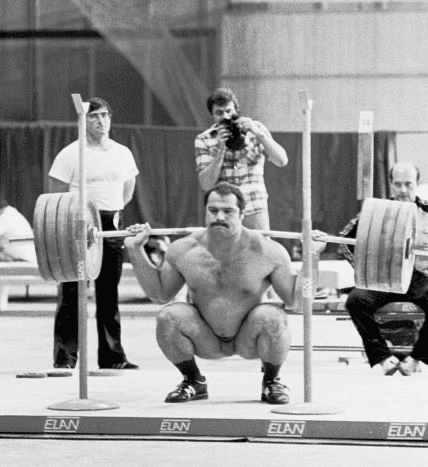
The Soviets thrived with the TF Max
“The hardest hits you see on the football field are in alumni games and the first practice in pads,” said JUCO legend Barney Eames. “When players are freshest, they’re the most excited. They want to hit someone.”
That line sticks for a reason.
Fresh body. Fresh ego. Fresh CNS, ready to let it go without restraint.
That lesson applies fast when people start flirting with daily maxes and hardcore mindsets without understanding the cost. If it sounds too good to be true, there’s a hook. Same way your oilfield uncle was rationalizing when he married the massage therapist from a neon-lit rub and tug in Little Tokyo and convinced himself she was different. He wasn’t special. Neither are you.
Now let’s put this where it actually matters: strength training.
Most people misunderstand Maximum Recoverable Volume (MRV). MRV isn’t just how many sets you can survive. It’s the amount of volume intense enough to induce adaptive overload that you can recover from. Put simply, it’s how much total stress you can absorb and still adapt.
And stress isn’t just physical.
It’s psychological.
It’s emotional.
It’s nervous system related.
Context is king.
Pulling heavy deadlifts at Metroflex with Colonel Brian Dobson slapping you, music blasting, heart rate jacked like you’re about to wrestle an alligator at the circus in Hugo, Oklahoma is a very different hit than pulling clean, technical reps in your basement to Mozart while barely breaking a sweat.
Same bar. Same plates.
Totally different cost to your finite energy reserve.
Totally different amount of volume you can recover from.
CF Max vs TF Max
The Soviets understood this. They separated CF max and TF max.
CF max is performance mode. Competition focus. Identity on the line. Aggression high. Adrenaline flowing. This is what you use on the platform, under the lights, after a taper, when you’re ready to empty the tank. It’s powerful. It’s effective. And it’s expensive.
TF max is training mode. Calm. Technical. Confident. Heavy, but not heroic. The bar moves well. You could do more, but you don’t need to. The win isn’t today’s PR. The win is the statistical trend over time.
Daily squat training only works when you understand this difference.
Most people fail because they bring CF max psychology into TF max training. Every rep becomes a proving ground. Every top set carries emotional weight. Every miss feels personal. Fatigue skyrockets even if volume looks reasonable on paper. The nervous system never gets a day off.
That’s alumni-game lifting.
Looks impressive. Feels intense. Wrecks you long term.
Daily max squatting done right looks boring to outsiders. You work up to a heavy single around 90–95 percent. No ammonia. No screaming. No pacing like you’re about to fight someone in an Allsup’s parking lot. Same setup. Same walkout. Same cues. If warmups feel crisp, you climb. If they don’t, you shut it down and walk away.
Walking away while you still feel strong is a skill.
Old heads understood this. Olympic lifters and guys with hard jobs didn’t need a hype playlist to do their work. They showed up. They handled business. They saved the fireworks for when money or trophies were on the line.
Daily squatting is practice under load. It grooves efficiency. It builds confidence through repetition. Heavy stops feeling scary because you see it all the time, not because you beat yourself into submission emotionally.
Then, when it’s time to perform, you flip the switch.
After a taper, with recovery high and fatigue low, aggression becomes intentional. Arousal becomes deliberate. That’s when the extra 5–10 percent shows up. Sometimes more. That’s not magic. That’s saved currency.
The Russians said CF max is about 10 percent higher than TF max. That only sounds crazy if you ignore context. Squat 700 in training and 770 on the platform isn’t a miracle. It’s environment, arousal, adrenaline, and intent.
Ignore that distinction and the numbers stop making sense fast.
Final Thoughts
I am not telling you to run out and daily max squat. I do not train this way and most people would wreck themselves trying. But it can work when the psychology is right, the volume is controlled, and the ego stays on a leash. You’ve now seen why it works and how it works.
Next week we flip the script. We’ll talk about pulling CF max out less often, on purpose, in the right context, and how that restraint is exactly what lets you hit bigger numbers when it actually counts. Strength isn’t built by blowing your wad every session. It’s built by saving ammunition and choosing when to pull the trigger.
Build Bulletproof Resilience HERE.