Fresh Matters
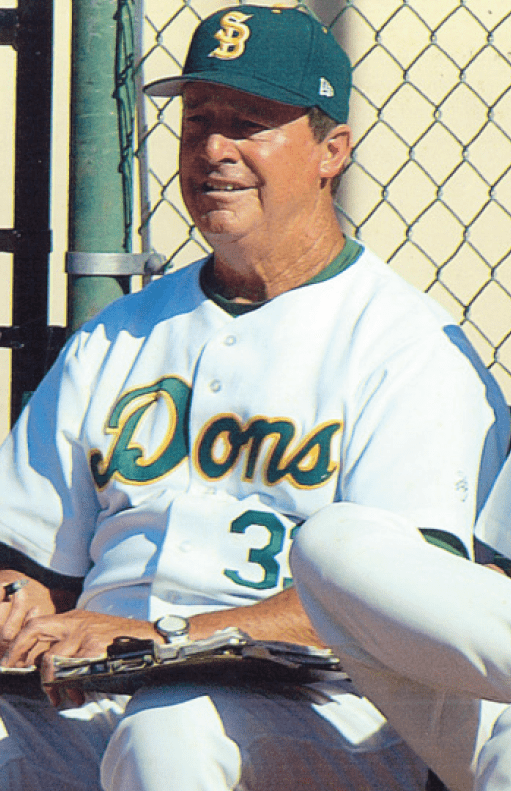
Coach Warrecker
“The hardest hits on the football field always happen in alumni games and the first day in pads,” Coach Barney Eames used to say. “That’s when the players are freshest and most excited to light somebody up.”
That stuck with me because it applies to every hard sport and every serious training system. The freshest athlete is often the most dangerous athlete. Assuming the athlete is already a savage, fresh matters. Pee Wee Herman fresh is still Pee Wee Herman.
That sure as hell is not an invitation to overvalue short term readiness over doing the work that drives adaptation. That’s another conversation for another day.
Most lifters never learn that lesson because they confuse exhaustion with progress. If they are not beat into the dirt every session, they think they are losing ground.
Soreness and fatigue are not bad. They are just not the goal. They are byproducts of hard productive training, not the finish line itself.
That mentality sounds hardcore right up until your joints ache constantly, your sleep tanks, your motivation disappears, and every warm up feels heavy. You used to wake up rocked up. Now every morning feels like a tribute to the band Limp Bizkit, if you know what I mean.
You cannot stay pinned at redline forever.
Real World
NFL teams back off contact before games. Fighters taper before stepping into the cage. Sprinters reduce volume before major races. Every serious performance system in the world understands the same thing:
Fatigue masks fitness.
That’s what a reload is.
It is not quitting, taking it easy, or avoiding work.
A reload is strategic recovery.
You reduce enough fatigue to let performance rebound while maintaining enough quality work to preserve strength, speed, muscle, and technical sharpness.
Zatsiorsky explained this years ago. The fitness effect lasts longer than the fatigue effect. In simple terms, your gains remain while the exhaustion starts to dissipate.
That is why athletes suddenly feel explosive after backing off for a few days. The strength was already there. Fatigue was sitting on top of it like a wet saddle blanket.
Practical Application
The setup I like to start with is simple:
Drop one set from every exercise.
Reduce working weights to roughly 70 percent of normal.
Move every rep explosively with clean technique.
That’s it.
This is where technique sharpens. Bar path improves. Timing improves. Positions clean up. You stop fighting the movement and start owning it again.
For strength athletes, this becomes technical practice under manageable fatigue. You are finally crisp enough to actually refine movement instead of surviving ninety plus percent loads and hoping for the best.
For bodybuilders, this is often where the mind muscle connection comes back. Pumps improve. Execution improves. Muscles start working instead of just joints and ego.
Most athletes benefit from a reload every 3 to 6 weeks depending on stress, recovery, sleep, age, work demands, and training intensity.
The older I get, the more obvious it becomes that recovery is a skill.
Hard training matters.
But your ability to absorb hard training and display the adaptation when it counts matters even more.
Default Reloads
A lot of old school athletes reloaded without ever using the word reload.
Arnold talked openly about days where he walked into the gym, felt terrible, and simply walked back out.
College athletes get forced reloads through travel, finals week, bye weeks, holidays, lighter practice schedules, and seasonal transitions. NFL teams reduce contact before games. A lot of reloads happen naturally without anybody putting a fancy sports science term on it.
But if you train hard year round with no forced layoffs, no off season, and no breaks in intensity, eventually you need to plan them.
Ishtaboli
Legend has it, according to some old head I met at the corner store in Fort Towson, Oklahoma, right near Tommy’s Bar, The Wranglers Club in Antlers was more than just a honky tonk bar. I’d already heard stories about it years earlier from Brian Dobson at Metroflex. The old head just added more fuel to the fire. The man smelled like Colt 45 and bad decisions, but I listened anyways.
Tin roof. Loud jukebox. Cold beer. Inside was chaos.
Out front sat a field where Choctaw men played Ishtaboli, basically a more violent version of lacrosse. The Melungeons in Appalachia called it Indian Baseball, and from everything I’ve heard, it carried the same mix of violence, pride, and identity wherever it was played.
Barefoot.
Two sticks each.
One ball.
No pads.
No mercy.
Bodies collided. Blood hit the grass. Nobody looked for a whistle. Nobody asked for help. You got up or you got run over.
The chief once tried to shut it down. Put out a moratorium. Said it was over.
But one night his grandson laid a man out cold. Violent and clean.
The chief watched it happen and broke into a war dance on the sideline.
That told you everything.
Rules are what people say.
Culture is what people celebrate.
But according to the old head telling the story, if the games got too violent or practices got too violent, they backed things down during the week. Not because anybody got soft. Because they understood the same thing Coach Barney Eames understood.
Fresh matters.
They practiced hard enough to improve, but they also understood you cannot stay in constant collision mode forever and expect peak performance when it counts.
That’s the point most people miss.
Even the hardest cultures in the world understood rhythm. Collision and recovery. Pressure and release. Push and pull.
Nobody operates at maximum intensity forever without eventually breaking down.
That’s why reloads matter.
Practical Reload Signs
• Bar speed suddenly drops
• Warm ups feel unusually heavy
• Joints ache longer than normal
• Sleep quality declines
• Motivation disappears
• Pumps vanish
• Training starts feeling like survival instead of performance
• You are living on caffeine and rage just to get through warm ups
Simple Reload Checklist
• Cut total volume to around 60 to 70 percent
• Keep movement quality high
• Accelerate every rep aggressively
• Leave a few reps in reserve
• Keep workouts shorter
• Leave the gym feeling better than when you walked in
• Prioritize food and sleep like they actually matter
Some technical lifters feel flat if intensity drops too low. Olympic lifters especially. Advanced powerlifters sometimes too.
For those athletes, keep some heavy work in while drastically reducing volume.
Instead of six doubles at 90 percent, hit three sharp singles and leave.
Enough intensity to stay sharp.
Low enough fatigue to recover.
A reload is not weakness.
It is maintenance on a high performance machine.
Fred Warrecker (RIP), the legendary Santa Barbara coach, told us before our first league game, “I might not have the fastest horse in the race, but I’ll damn sure have the freshest.”
That year we ran the table in the Channel League and didn’t give up a single point.
Fresh matters.
Reload.
Recover.
Then get back after it like somebody owes you money.
Train Hard. Peak Strong. Recovery Built In.Josh XXL Strength & Size – GET IT HERE