You Built the Strength. Don’t Blow It on Meet Day.
by- Josh Bryant
Ogden always showed up big on meet day.
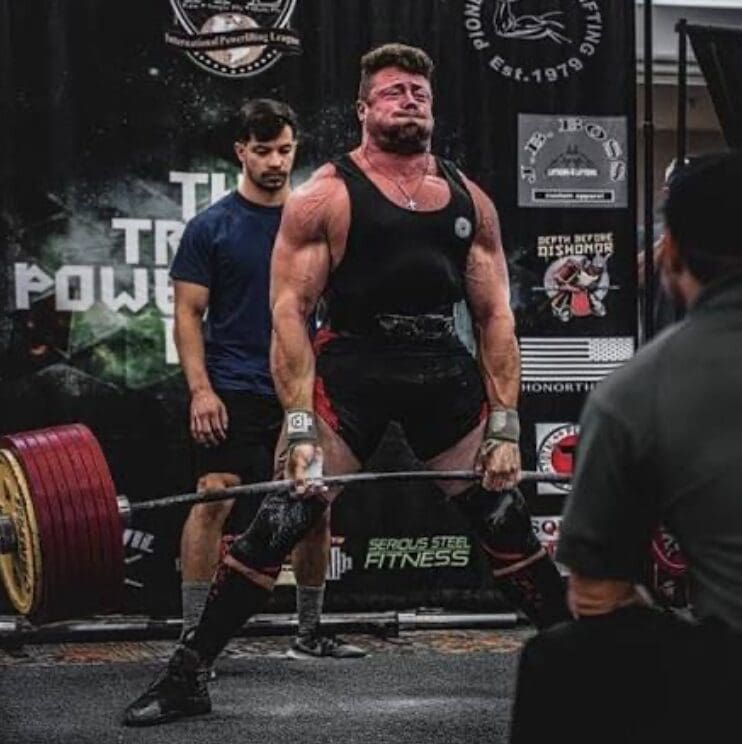
You’ve been working harder than an ugly stripper for months. You added muscle, built strength, hit rep PRs and survived the peaking cycle. Now comes the day of reckoning: the powerlifting meet.
This is where you display the strength you built. Unless you made a major weight cut or something unusual happened, you should not be stronger in the gym than you are on the platform.
Unfortunately, lifters routinely sabotage months of good training during the final weeks or on meet day. Here are 10 of the biggest mistakes.

Follow my 12-Week Powerlifting Meet Prep Plan and arrive ready to perform when it counts.
1. Adding New Exercises at the Last Minute
Three weeks out is not the time to try sumo because you watched somebody pull a world record on Instagram. Do not add a new accessory movement, rebuild your bench technique or try some CrossFit death circuit.
Dance with the one who brought you.
Meet preparation is a funnel from general to specific. Everything should narrow toward the nine attempts that count.
2. Changing Your Nutrition or Supplements
Meet week is not the time to turn over a new leaf. If your normal diet is Steak ’n Shake and Taco Bell, suddenly switching to organic rice and wild poultry might sound healthy, but it can tear your stomach to pieces.
Even creatine can cause problems the first time you take it. That makes for a real crappy meet, pun intended. Eat what you know you digest well. Meet day is not a laboratory.
3. Trying to Fix Your Sleep Overnight
Sleep matters, but stay close to your normal routine. If you go to bed at 3 a.m. every night, trying to fall asleep at 7 p.m. before the meet will not work. You’ll just lie there staring at green snakes on the ceiling like that old Johnny Bush song.
One bad night will not destroy your meet. Panicking about it might. Fix your sleep habits weeks out, not the night before.
4. Abusing Stimulants During Meet Week
Pull back on stimulants during the taper. You do not need three scoops of pre-workout for a few light singles. Preferably, consume no caffeine during meet week. When it comes back on meet day, it’ll hit you like a freight train.
Do not blow your whole stimulant load during warm-ups either. Meets can run all day. Empty the tank before squats and you’ll be mentally fried by deadlifts.
5. Not Knowing Your Federation’s Rules
The SPF is not the IPF. There is the written rule, and then there is how the judges actually call it.
In the early 2000s, I watched deep squats get turned down at USAPL meets because the judges supposedly wanted no possible doubt. Some of them probably needed a Braille copy of the rulebook.
Practice legal depth, but learn how your federation interprets it. When in Rome, do as the Romans do.
The same goes for commands. Practice them until your response is automatic, or you’ll lose a good bench by jumping the start command.
6. Failing to Practice With Competition Equipment
If you plan to wear knee wraps, learn to use them well before the meet. Some lifters adjust quickly. Others need months.
The same goes for a monolift. It changes the squat. Practice on one before meet day, or walk your squats out if the rules allow it.
Competition bars feel different, and so does deadlifting without straps. I’ve watched lifters pull 900 with straps in training, then act shocked when they cannot hold 800 on the platform.
Train the skill you’ll be asked to demonstrate.
7. Doing Too Much Volume
Fatigue masks fitness.
When I moved to Texas about 20 years ago, there was a lifter at Metroflex who overtrained before every competition. I didn’t coach him, but I finally told him, “Just stay out of the gym the final week.”
He listened. His best competition deadlift jumped from 660 to 740. He hadn’t suddenly gained 80 pounds of strength. The fatigue had been hiding what was already there.
You’re probably stronger than you think. You just haven’t allowed the fatigue to clear.
Peaking is not building. If you’re still grinding five sets of five two weeks out, you’re digging a hole. Cut the volume, keep enough intensity to stay sharp and stop trying to prove your toughness every session.
8. Rushing the Peak
Peaking is a process, not a weekend project.
Cramming heavy singles into the final two weeks because you failed to plan is gambling with your total. Heavy singles need to be introduced early enough to see how your body responds.
The final week should feel almost boring. That beats turning every session into a county jail riot and arriving at the meet held together with tape and ibuprofen.
9. Cutting Weight Without Accounting for the Cost
Weight cuts are about as useful as tits on a bullfrog unless a title, record or qualifying total is on the line.
For your first meet, compete near your normal weight, hit PRs and learn how meets work.
If you cut, be honest about the cost. Competing at 198 after training at 221 does not make the strength loss disappear. I’ve watched strong lifters drop 35 pounds in a week and a half, go three for nine, then act shocked that an IV and a few meals did not magically restore them.
The barbell does not care about your ego.
If your total usually drops five percent after a cut, build that into your attempts instead of living in fantasy land.
10. Refusing to Adapt on Meet Day
Have a warm-up plan, but do not worship it.
Some meets have kilo plates and great equipment. At others, you’ll be lucky to find matching 45s and a bench that does not wobble like a meth head who just won the lottery.
If 370 was planned but 365 is loaded, take 365 and move on.
Adapt to the conditions too. I once coached lifters at a meet in Austin in a gym with no air conditioning. Most of the field went three for three on squats that morning, but as the building heated up, half bombed out on deadlifts. A couple of my lifters won when they probably should not have simply because we adjusted their attempts to the conditions.
Your opener should be a freebie, especially on the squat. A grinding opener can wreck the rest of your day. I’d rather finish squats knowing I had a little more left than grind, miss depth and spend the rest of the meet trying to recover.
Finally, nerves are not the problem. Harnessed correctly, they make you stronger. If you feel nothing before competing, the meet probably does not mean much to you.
Use breathing, prayer, visualization, your coach or whatever puts you in the right state.
You spent months building strength. The final weeks are about removing fatigue, eliminating surprises and putting yourself in position to show it.
Build strength in training. Display it on the platform.