Are You Too Old—or Just Acting Old?
by- Josh Bryant

About five years ago, during the pandemic, I stopped at the Ol’ Beer-To-Go on the south side of Hugo, Oklahoma, to grab a coffee.
It was hot, humid, and basically a default wet T-shirt contest. Out back was an older white guy working off his truck. His face looked like weathered canvas left in the Oklahoma sun, and his tan made him a default member of the Cherokee Nation.
From the neck down, though, the guy looked about 28.
He wasn’t a lifter or masters athlete. Just an old head working his ass off in the heat. I asked the guy inside how old he was.
“68.”
The man telling me this was about 53 and looked like he’d openly declared war on his liver sometime in the 1990s. He looked outside at the old man and said something along the lines of, “That ol’ bastard’s just too dumb to know how old he is.”
Coming from him, that made it funnier. But I’ve thought about that old head ever since.
He wasn’t biohacking. He wasn’t plunging into an ice bath, monitoring his sleep score, or swallowing a tackle box full of supplements while discussing mitochondrial health on a podcast. He wasn’t following a longevity protocol.
He was 68, working in the Oklahoma heat, making money, and too dumb to know he was supposed to be old.
Somewhere along the way, turning 40 became a medical diagnosis, and the experts started acting like you needed to rub Vagisil on your cojones before touching a barbell.
I don’t buy that.
Age matters. Recovery matters. Injury history and goals matter. But your birthday doesn’t write your program.
Coach the Man, Not His Birth Certificate
Say I’m working with a 45-year-old who has trained seriously for 25 years. He’s strong, healthy, recovering well, and loves lifting heavy. Why make him train lighter because he turned 45?
I work for the client—not the calendar. His goals matter.
If what he wants carries additional risk, my job is to explain it. Then he decides whether the benefit is worth it. My job isn’t to neuter the goal because it makes me more comfortable. Training hard and training recklessly aren’t the same thing.
What changes is which risks you’ll take. At 22, you feel bulletproof and recover faster when something goes wrong. Later, there’s less reason to take a stupid risk that doesn’t advance your goal. Eliminate unnecessary risk, not hard training.
Heavy Weight May Not Be the Problem
I’ve worked with older lifters who do great with heavy singles. They handle intensity fine, but too much volume puts one foot in the grave and the other on a banana peel. Give them two quality sets and they’re ready to go again.
I’ve also seen the opposite. Some powerbuilders feel better with more volume. One may need leg extensions before squatting to get his knees ready. If it works, why argue with it?
If someone says heavy singles feel great and his results back it up, that’s useful. If he says that while constantly getting banged up, we’re having a come-to-Jesus meeting.
What you feel matters, and so do the results.
Pay the Warm-Up Tax
I’m a big believer in cold-start strength. Don’t warm up just to put on a mobility circus.
But I’m a bigger believer in doing what works. At 25, that might be two warm-up sets. At 55, it might take 25 minutes.
So what? If it keeps you healthy and lets you perform, that’s the cost of doing business. Instagram doesn’t write your program. Your performance does.
Want to Sprint Again? Earn It.
Here’s where both camps get stupid. A 48-year-old former athlete wants his speed back. One says he’s too old to sprint. The other screams that age is just a number, runs to Tractor Supply for some chickens, and has them chase him through the parking lot on the whistle. Now we’ve added agility too.
I wouldn’t do either. I’d build him back toward sprinting.
His hamstrings, calves, Achilles, and mechanics need to be ready. Start with tempo runs at controlled speeds. Let the body remember how to run before asking it to run like hell.
Next, introduce short accelerations. There’s a hell of a difference between accelerating for 10 or 15 yards and asking someone who hasn’t sprinted since George W. Bush was president to repeatedly hit maximum velocity.
How long it takes depends on the person. Some start a business and make a million dollars within months; others grind a lifetime. There’s no universal deadline, but there is always a process. Earn your way there.
Has his training become nothing but squats, benches, deadlifts, and machines? Start moving again with backward sled drags, farmer’s walks, marches, and lunges.
Resistance slows movement while reintroducing the body to space. Start under load, then reduce it and increase velocity as the body earns it.
Not every 50-year-old needs to sprint. But if speed matters, getting older doesn’t mean surrendering it. You may need a smarter road back.
Don’t Forget How to Jump
The same principle applies to jumping. If a healthy 55-year-old wants to maintain explosiveness, I don’t see why jumping must disappear. But I’m not starting him with depth jumps off his Suburban wearing a weighted vest either.
Start low: pogo jumps, low box jumps, and low contacts. One or two exposures per week may be plenty.
A box jump develops explosive force without the same landing demands. Jump onto the box, step down, and gradually progress.
Don’t Let Normal Life Out-Athlete You
A guy tells me, “I don’t care about competing anymore. I want to be strong, muscular, athletic, and able to do things with my kids for the next 30 years.”
Great. Keep lifting. But if all he does is powerlifting four days per week, I’m looking at what’s missing. Carries and sled drags keep strength involved while he moves through space. Tempo runs build aerobic capacity and preserve running mechanics without becoming maximal sprints.
Include full-range movement without turning into a mobility guru who spends 45 minutes fixing imaginary posture problems. Use a deep lunge, deep squat variation, or cobra lat pulldown with a real reach.
Expose him to positions life may demand. The most athletic thing he does all month shouldn’t be jumping to grab something and pulling a muscle because his body hasn’t visited that position in five years.
The Goal Still Runs the Show
I’m a strength guy. I’ll never tell somebody strength doesn’t matter. But if your goal changes from winning meets to staying strong, muscular, athletic, and capable for decades, the program needs to change with it. Strength can remain central without becoming the entire damn program.
Carry something. Move through space. Run, jump, and use ranges of motion you don’t encounter sitting in a chair or repeating the same five exercises.
This doesn’t mean everybody over 40 must sprint, jump, or carry. If you only care about powerlifting, train for powerlifting. If you don’t care about sprinting, don’t sprint.
The athlete’s why determines the how. I don’t have some canned “over-40 program.” I have principles, and I coach the person in front of me.
If you’re thriving on heavy singles, keep them. If volume is burying you, reduce it. If you need 25 minutes to warm up, take 25 minutes. If something that worked at 35 stops working at 55, don’t cling to it out of nostalgia.
Getting older doesn’t mean training like you’re waiting for the undertaker. It means getting smarter about what deserves your effort, recovery, and risk.
That 68-year-old behind the Ol’ Beer-To-Go probably couldn’t tell you a damn thing about periodization, recovery curves, or longevity training. Maybe the guy inside was right. Maybe he really was just too dumb to know how old he was.
There are worse things to forget.
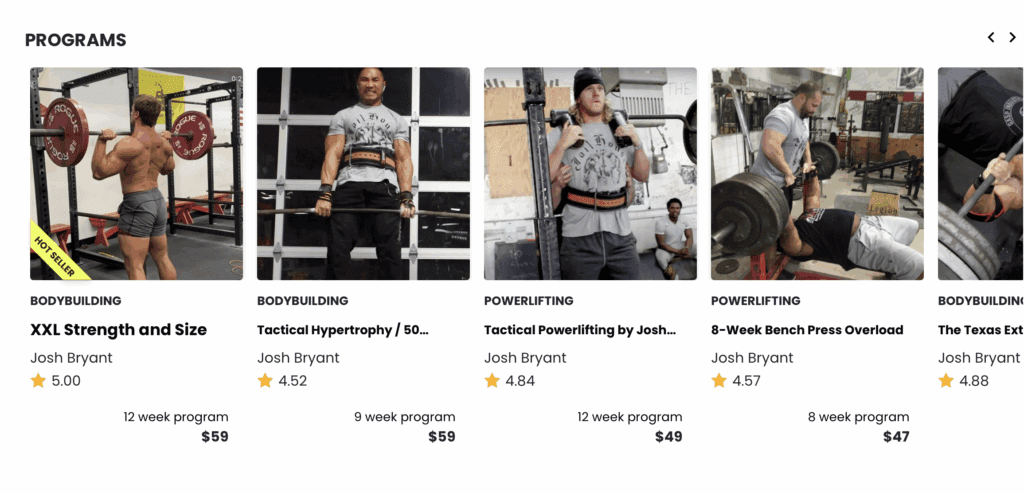
Raise the ceiling with a JoshStrength program HERE.