
Power of Partials: Protecting Joints and Blasting through Sticking Points: Part I
by Joseph Giandonato, PhD, MBA, CSCS
Introduction
Enter any Globo-gym during the post-rush hour pandemonium and you’ll bear witness to legions of mile high squatters and clusters of middle-aged men performing bench presses with a range of motion that would make the down and distance preceding a quarterback sneak for a score seem like a local 5k.
Range-of-Motion
Range-of-motion (ROM), according to one of the industry’s premiere accrediting bodies and alphabet organizations, represents the full angular distance a joint is able to move through its complete, normal-path movement. In lay terms, this means the articulation or movement of a joint, which is influenced by a jambalaya of variables — none of which contain paprika, garlic, or shrimp — that we will soon cover.
Range-of-Motion Variables
The recipe for range-of-motion may not be as palatable as a Cajun delicacy, but its ingredients are just as varied. Foremost, ego is one of ingredients found in the largest quantity. Whether driven by sheer hubris or denial of eroding musculoskeletal health and wanting to still mount big numbers in the gym to whether to impress others or burnish their own pride, ego has the final say in what is loaded on the barbell, what dumbbells are chosen, and how the exercise is performed. Many lifters and some athletes will operate in a range-of-motion that is comfortable for them and enables them to move appreciable loads to feed their egos and drive or maintain strength and various aspects of muscular fitness. Strength is range specific. We will revisit this.
Next, we dust off the decades-old textbook from our A&P class in college to identify the other ingredients.
Anthropometry, or the size and dimension of the human body and its parts, is an ingredient found in large quantities in the ROM recipe and arguably one of the most influential.
For instance, someone with a longer torso will have the structural foundation to be a better swimmer as it causes less drag which is associated with longer legs.
Out of the water, where most compound movements are performed — unless you catch yourself mindlessly scrolling through TikTok and Instagram reels that highlight some view-grabbing clip of an influencer bench pressing on the bottom of pool — a longer torso is beneficial when squatting or pressing, though it poses a challenge when performing conventional deadlifts as more stability is required to buttress a longer spine. Longer arms generally equate to a better deadlift but make heavy pressing daunting.
A person’s anthropometry is a double-edged sword. What causes them to seem “weak” in the gym, confers a divine advantage in competition. Take Kevin Durant for instance. He got pinned by a barbell loaded with 185 pounds during the pre-draft NBA Combine but has since terrorized defenders with astounding length that enables him to launch unblockable jumpers at will.
And a person’s anthropometry can certainly impede pain-free movement. Let’s briefly examine shoulder impingement, which may be adaptive or structural. When someone performs a lot of pressing movements, whether horizontal or overhead, it can enflame the supraspinatus, a rotator cuff muscle that contributes to abduction and stabilizes the shoulder. When this occurs, the supraspinatus gets pinned beneath the acromion. Sufficient rest and incorporating more pulling or rowing movements typically helps alleviate impingement of this type. However, structural shoulder impingement is a bit more challenging to navigate. Here, the shape of the underside of the acromion, which can be flat (good), curved (also good), hooked (bad), or beaked (neither good nor bad, depending on the location of the bony prominences) can influence impingement symptoms — as the supraspinatus may rub against the bony prominences of the acromion or get trapped beneath it — and overall shoulder range of motion.
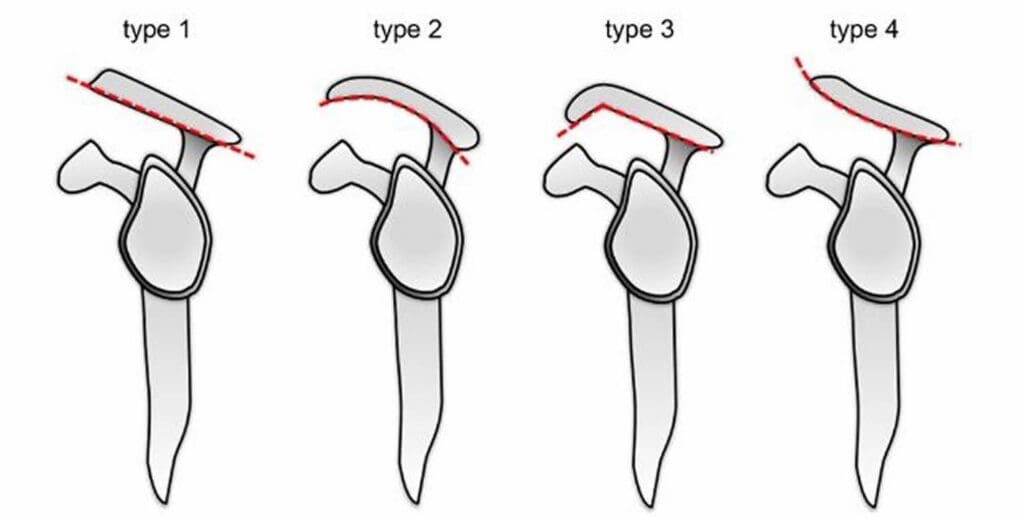
Moving on, we have arthrokinematics, or fine movements of rolling, gliding, and spinning that occur between joint surfaces and osteokinematics, or large, visible movements that are observable during exercises and in competition. These movements — flexion, extension, abduction, adduction, and rotation — require immense muscular forces which are magnified under external loads.
Lastly, ROM can be affected by soft tissue quality, age, biological sex, activity level, and of course injury history. Of all the “ingredients” covered injury history is often the most problematic one to traverse, but there are some workarounds that can be incorporated to establish and maintaining a training stimulus that is conducive to improving strength and various facets of muscular fitness.
ROM can be improved, both acutely and over the long haul through targeted interventions such as self-myofascial release, percussive therapy, massage, and static stretching among other modalities.
In Part II, we will explore how we can preserve musculoskeletal health and facilitate improvements in strength through incorporating partials in our training.
Power of Partials: Protecting Joints and Blasting through Sticking Points: Part II
by Joseph Giandonato, PhD, MBA, CSCS
Although we seemingly vilified training with a limited range-of-motion like a pack of jealous internet trolls would swarm a comment thread on a post of squat that earned two white lights and not three at a local powerlifting meet, training with a limited ROM in the form of partials can deliver improved strength, help lifters and athletes work around injuries and unique anthropometry, and actually help propel them through plateaus.
While many still have a lot of tread on our tires, there’s still mileage on our bodies. Lifting heavy weights and training intensely for years takes a toll on our musculoskeletal health. Though I am not a betting man as my surname would suggest, I’d wager that most of you reading this are nursing an injury, whether old or new, and at some point, have manipulated your technique on a exercise to avoid pain.
Injuries still occur or can be exacerbated even with painstaking execution of crisp, certification granting course textbook technique. And let’s face it, some movements may not be the biomechanical yin to our anthropometric yang. As such, some of the most popular movements performed among the iron brethren — squat, bench press, deadlift, and overhead press — staples in strength and size building pursuits, require modifications to maintain a training effect.
And if you modify your training to incorporate partials, you can still get stronger. However, keep in mind that strength is very range specific. So, if you train in a certain range-of-motion, that’s where they adaptations in nervous, muscular, and connective tissue will take hold, plus or minus a few degrees of joint ROM.
The squat tops the list of movements that are most butchered among lifters and carries the greatest injury risk, when not performed properly.
If achieving an acceptable ROM is a challenge — one in which the anterior hip descends below the tibial plateau — or hips below the knees — with a neutral spine, it might be prudent to perform a squat to a box of varying heights to focus on improving ROM and strength incrementally. Squatting to a box differs from a box squat in that the stretch shortening cycle is not interrupted and the box serves as a tool providing kinesthetic feedback rather than a platform from which explosive concentric muscle action is cultivated.
Once an acceptable ROM is established — close to 90 degrees — or a position in which the hips and knees are level — and that ROM is accompanied by strength. We can then begin to incorporate some partial training methodologies, such as squats performed from pins in the rack aka “Anderson Half Squats” named after the legendary Paul Anderson, a Olympic gold medalist in weightlifting and an accomplished strongman.
Anderson Half Squat
Similar to box squats, Anderson half squats eliminate the stretch short shortening cycle, but unlike box squats, these focus exclusively on the concentric — helping develop sheer lower body strength is critical to harnessing muscular force needed to achieve triple extension and reenforcing leg drive for conventional pulling.
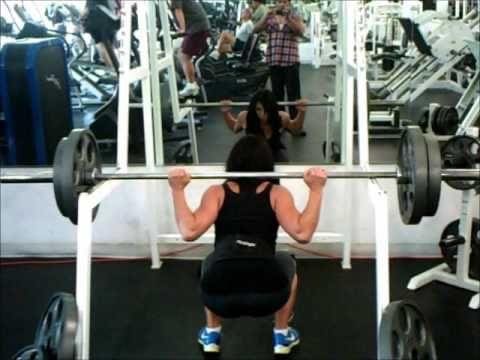
How to Perform
Make sure you use a power rack with safeties. Secure the safeties at a height that is around the mid-point or half-squat position — so the point between circa 90 degrees of hip flexion and lockout. Pull yourself under the bar and position yourself so your shoulders are aligned over your knees with a firm grip on bar that is rested atop a tightened upper back. Brace your core, get a big breath, tense up again, and push your feet through the floor. Gently return the bar back to the safeties and reset prior to a subsequent repetition, if indicated. A rule of thumb is to load with up to 60% of your 1RM of your barbell back squat and focus on explosiveness before progressing up to 80-90% of 1RM. These can be performed as singles or clustered.
Walkouts
The next squat variation that would technically be considered as a parallel involves unracking a barbell comprising a load beyond your 1RM and walking out with it into the starting position of your squat prior to the descent. Similar to overcoming isometrics, heavily loaded walkouts have purported to increase neural drive and tap into large pools of higher threshold motor units. However, similar to overcoming isometrics, walkouts should be used sparingly. They do, however, have some utility in helping lifters gain confidence with handling heavier loads than ordinarily accustomed to. Any potentiating effecting that heavy walkouts render remains unclear according to recent research which reported no discernible impact on squat performance on subsequent attempts.
Next, we move onto the bench press and its first cousin and one of its top-flight assistance exercises, the overhead press.
Seldom are these performed with visually appealing form. ROM is often shortchanged for ego boosting and joint shearing loads to impress people that are oblivious or notch accolades in non-existent record books of commercial gym bravado. These are two movements that are adversely impacted by anthropometry with longer armed lifters requiring substantially more rotational torque to displace a barbell of the same load than their shorter armed counterparts.
And longer armed lifters performing a bench press from the chest can be both uncomfortable and potentially injurious. As a former strength and conditioning coach who had scholarship basketball players under my tutelage and NBA free agents fighting for their next deal, the last thing I wanted to do was risk injury by forcing ROM that was anatomically difficult to achieve. Instead, I deployed the following movements as alternatives:
Three Board Bench Press
Performing bench presses off an elevated surface from the chest, whether three 2” x 4” boards adhesed together or a foam roller, prohibits excessive extension of the humerus and anterior-superior migration of the humeral head which can contribute to pec strains and impingement, respectively.

As an alternative, bench presses can be performed to a point that is a few inches off the chest, however, this requires greater eccentric control and dynamic stabilization of the rotator cuff muscles and does not provide much needed kinesthetic feedback that three board bench presses do. Instead, bench presses with a pause off the chest should be incorporated among lifters and athletes who are able to perform a bench press with a full ROM and used as a means to improve rate of force development and to help barrel through sticking points as the length-tension relationship of prime mover muscles involved in the bench press shift altering muscular recruitment patterns.
Overhead Press from Pins
Though this overhead pressing variation removed some range of motion from traditional overhead or military presses — it contributed to boosting pressing strength of many Olympic and professional athletes who worked under Charles Poliquin, who popularized the exercise in the early 2000s.
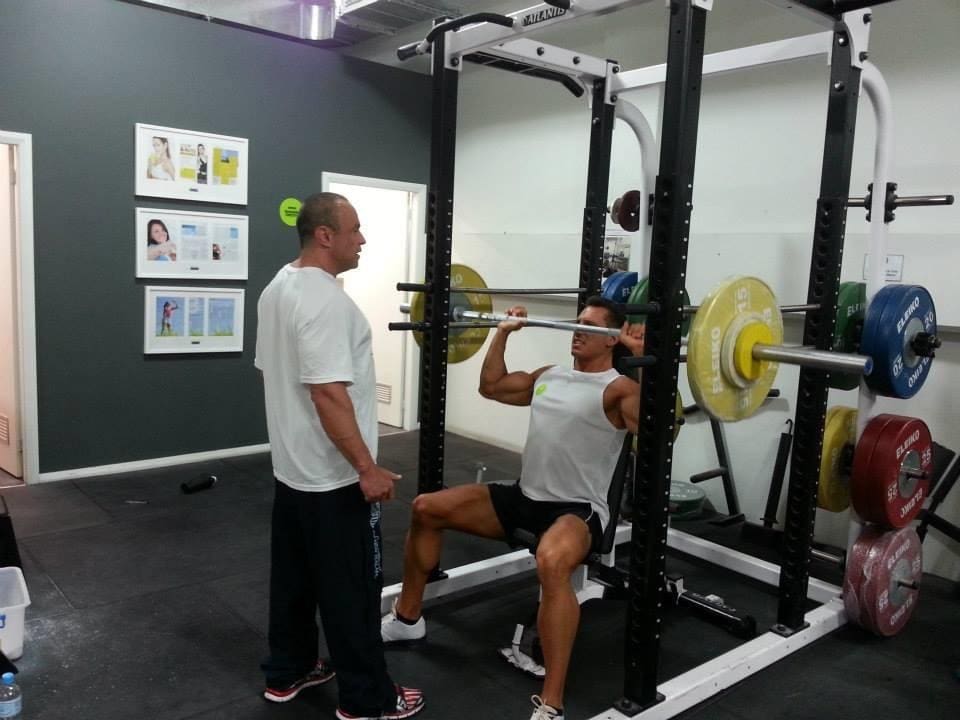
The overhead press from pins is akin to the Anderson half squat. Both performed from a dead stop position and with a halved ROM. Think of the overhead press from pins as the Anderson half squat’s upper body equivalent.
How to Perform
Again, making sure you use a power rack with safeties, position them at a height that is equivalent to chin level (or higher, depending on your anthropometry) while seated. Place the barbell atop the safeties and firmly grasp the barbell with a shoulder-to-hip width grip and push the bar through the ceiling. Slowly return the barbell to the safeties and reposition yourself before attempting another rep. These can be performed as singles or clustered, but if you are performing consecutive reps, make sure each repetition is initiated from a dead-stop position.
Last up is the deadlift.
Whether deadlifts from the floor are necessary for athletes remains an unresolved debate, deadlifts still reign king in terms of cultivating primordial might and developing the posterior chain, and also has a direct correspondence to lifting a car off your child (heaven forbid that happens, but at least you’ll be better prepared).
But if we want to mitigate shear forces during the deadlift which may be deleterious to spinal health, we have a few options:
Our first option is an F-Tier one: Avoiding the deadlift. If you’re an NFL quarterback with a $200 million contract, there might be some safer plays that doing conventional deadlifts with two times your bodyweight, but for most serious lifters and many athletes, avoiding deadlifts completely is no bueno.
The second option is maybe B- or C-Tier: Reducing the load. Cool, but its not gonna build maximal strength and serious lifters not going heavy for stretches of time is akin to a silverback going on androgen deprivation therapy. After a while, that silverback will turn into a marmoset.
The third option is reducing the range of motion. You’ll still be able to handle and move heavy loads and have fun. Plus, if you are healthy, you can use partials to improve your leg drive or lockout strength.
Deadlifts From an Elevation
Unless you’re competing, all of these options can be deployed as a primary movement in your training program.
First up are Trap Bar Deadlifts. These are the safest option, if you are pulling from the floor. Not because many models have elevated handles, but the fact that your center of gravity is enveloped within the center of mass of the barbell — conferring great leverage and balancing the demand between the quads and posterior chain to hoist the barbell from the ground. Since they are more quad-dominant than conventional deadlifts, these are great to help build leg drive and can be performed as a standalone in the offseason, far removed from meets or as a top-flight assistance exercise for the deadlift as the meet nears. If loading trap bar deadlifts, consider working up to 10-20% beyond the loads you use for a conventional deadlift since they are a bit easier to improved leverage.
Next are Rack Pulls. These enable you to handle a lot of weight and can be performed as a walkout, similar to squats, although the set-up may prove to be awkward. Rack pulls do not have that great of carryover to deadlifts, since the contact point is the barbell and not the plates on each of its sleeves. They tend to drape and bend the barbell (if using above 455 pounds) and can create a lot of noise, which is a consideration if training in a commercial gym. However, rack pulls are great to improve lock out on the deadlift and place the traps under an enormous stretch — which will contribute to hypertrophic adaptations.
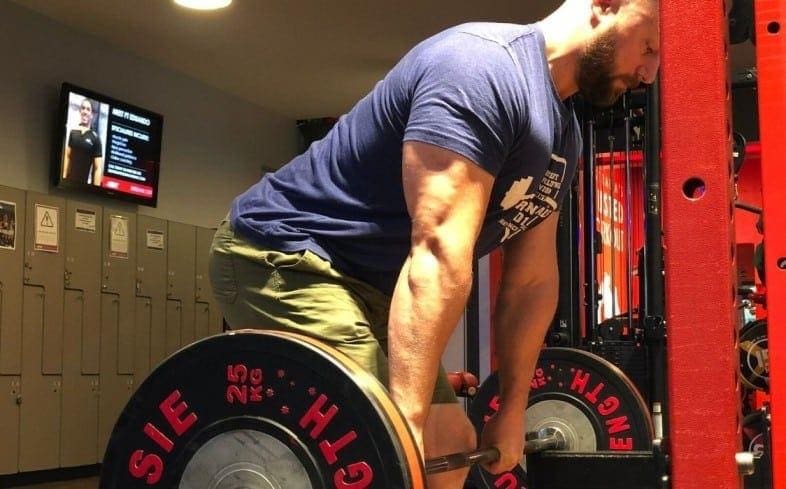
Last mentioned are Block Pulls. Like rack pulls, you can handle a lot of weight, but unlike rack pulls, the contact points are the plates on both sides of the barbell which has a greater correspondence to the deadlift. Stack plates, or preferably place platforms on which the plates on each side of the barbell can be supported. Identify where you miss and work from there.

Conclusion
Before we wrap up, know that partials can be leveraged to keep a rickety musculoskeletal system intact and help elite and Elite classification lifters rocket into a new strength stratosphere. But we need to acknowledge that partials are just another tool in the toolbox — an overused tool among seas of unwitting lifters on the floors of commercial gyms — but a versatile one for serious lifters and athletes.