
A Great Servant, A Terrible Master: Using VBT the Right Way
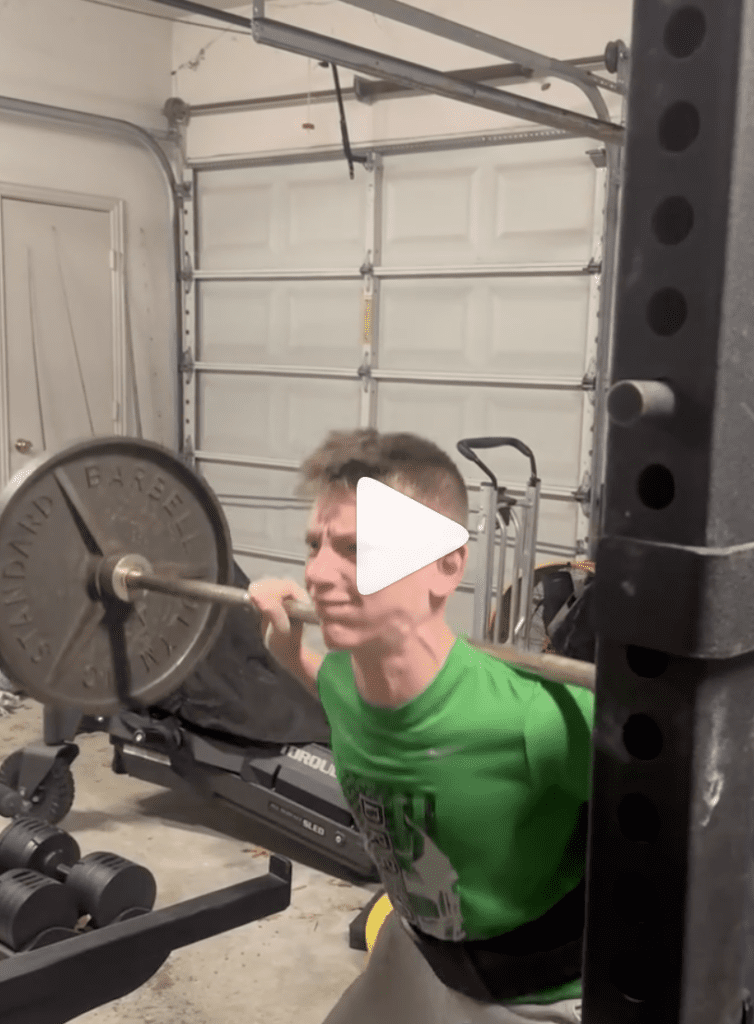
Josh using VBT with his son Luke as he learns regular barbell squats HERE.
Last week I wrote about when the tool becomes the boss and why that’s one of the fastest ways to become a worse coach. If you missed it, you can read it here:
The problem isn’t velocity-based training any more than the problem is a thermometer. A thermometer measures temperature. It doesn’t tell a doctor how to treat pneumonia. Likewise, VBT measures bar speed. It shouldn’t be writing your training program.
Used correctly, however, it’s one of the better tools we’ve added to strength and conditioning over the last couple decades. This week let’s look at where it actually earns its keep.
Gamifying Training
Violent intent drives adaptation. My friend Anthony Schlegel says, “Train violent. Be violent.” VBT gives that intent a scoreboard.
When an athlete gets immediate feedback on bar speed, the number becomes the target. Beat it. Every rep becomes a chance to beat the last one.
In a team setting this gets amplified quickly. Peer pressure is one of the most underrated training tools in existence. Plenty of athletes won’t push hard for a coach and won’t always push hard for themselves, but they sure don’t want to get embarrassed by the guy lifting beside them. Put everyone’s velocities on a screen and effort usually takes care of itself. That’s one reason so many college programs have embraced VBT.
The garage lifter doesn’t have teammates pushing him, but he still has a number from the last set or last Tuesday staring him in the face. Beat it. That’s a simple form of accountability that works.
Beginner’s Best Friend
Beginners don’t have the experience to judge bar speed yet. They haven’t accumulated enough quality repetitions to know what fast actually feels like.
VBT helps bridge that gap. The athlete sees the number, feels the rep, and starts connecting the two. After enough quality reps, they begin recognizing bar speed without looking at the screen.
It’s just as valuable for the coach.
A new athlete might squat 205 for five reps but have no clue what their actual strength level is. Even if you test a one-rep max, beginners often lack the technical skill and neurological efficiency to display their true strength under a maximal load. The number on paper isn’t always the athlete you’ve got standing in front of you.
Velocity gives you another way to prescribe training without guessing or asking a beginner to grind through unnecessary max attempts. Instead of building percentages from a questionable max or trying to teach RPE on day one, you can prescribe loads that produce the training effect you’re actually after.
That’s one reason many coaches with a Westside influence prefer brief maximal tension methods over true max effort work for beginners. You still expose the athlete to heavy loading, but you don’t have to rely on a one-rep max they probably can’t express yet.
Eventually they develop enough feel that they don’t need the device nearly as much. That’s the goal.
Fatigue Management
Sport coaches often live at one of two extremes. Either athletes spend the football season doing goblet squats because everyone is terrified of fatigue, or they keep hammering offseason loading during the competitive season and wonder why performance drops.
Velocity zones are one way to bridge that gap!
Suppose today’s heavy squat work is prescribed between 0.40 and 0.50 meters per second. Last week the athlete hit that zone with 305 pounds. This week they hit it with 315. They’re stronger while keeping the goal of the workout the same.
Velocity also tells you when productive work has become junk volume. If bar speed drops beyond your planned threshold, fatigue has changed the nature of the workout. If you’re chasing grinding strength adaptations, that’s fine. If today’s goal is power development, it’s time to shut it down.
Some coaches also use warm-up velocities to estimate daily readiness and adjust training on the fly. That can be useful, but like I discussed last week, it can also become a crutch if every decision starts coming from the device instead of the coach.
The more your goal is sport performance rather than simply improving the lift itself, the more valuable this information becomes.
Honest Work
One thing I appreciate about VBT is how it keeps submaximal work honest.
Strength athletes love proving themselves. Give them a percentage workout and many quietly add weight because they feel good. Others grind every rep because that’s their identity. The reality is every workout isn’t supposed to feel like a max effort attempt.
Sometimes the goal is simply moving moderate loads as fast as possible.
Say today’s strength-speed work is prescribed between 0.60 and 0.75 meters per second. If your first work set moves at 0.88, the weight is too light. If you’re grinding along at 0.48, congratulations—you turned speed day into max effort day. Check your ego at the door, adjust the load, and do the workout you came to do.
The bar doesn’t care about your feelings. It loves the truth.
Objective Progress
One advantage that doesn’t get discussed enough is tracking progress beyond one-rep maxes.
I’ve had athletes swear the bar was flying, only to find out it wasn’t. I’ve also had athletes walk in convinced they felt terrible, then move the same weight faster than they had the week before.
Maybe your squat hasn’t increased in four weeks, but 315 pounds is now moving 0.08 meters per second faster than it was a month ago. That’s still progress.
Those little improvements are usually what turn into big PRs six months later.
Team Setting
There are practical advantages as well. Large teams don’t always allow a coach to watch every repetition. Velocity data creates accountability and gives you something better than memory.
Seeing how an athlete’s bar speed at 75 percent changed over an eight-week block tells you far more than trying to remember how they looked six weeks ago. Trends usually matter more than one training session
None of this changes the larger point from last week’s newsletter.
VBT doesn’t know if the athlete cut depth, changed technique, is beat up from practice, or slept two hours the night before. It only knows how fast the bar moved. That’s valuable information, but it’s still only one piece of the puzzle.
Final Thoughts
The best coaches I’ve been around watch athletes first. The technology comes second. They use velocity data to confirm what they already suspect or to challenge an assumption before making a coaching decision.
If you’re watching the tablet more than the athlete, you’ve got it backwards.
VBT is one of the best tools we’ve added to strength training over the last couple of decades. Just remember it’s a tool. The coach still has to do the coaching.
Enough theory. Build real strength and explosive power with one of Josh Bryant’s proven training programs.